Local ServicesUrgent Help
Breathe Education
  • Early Years
    • Best Start for Life & Healthy Children Programme Birmingham
    • Adverse Childhood Experiences
    • Attachment
    • Emotional Intelligence & Social Confidence
    • Emotional Regulation
    • Resilience
    • Self Esteem
  • Primary School
    • Anger
    • Emotional Intelligence & Social Confidence
    • Emotional Regulation
    • Low Mood & Depression
    • Resilience
    • Self-Esteem
    • Trauma
    • Worry and Anxiety
    • Adverse Childhood Experiences
    • Attachment
  • Secondary School
    • Body Image
    • Eating Disorders
    • Low Mood & Depression
    • Psychosis
    • PTSD (Post-Traumatic Stress Disorder)
    • Worry and Anxiety
    • Gender Identity
    • Self-Harm
    • Social Media
    • Suicide
    • Transitions
  • SEND
    • ADHD (Attention Deficit Hyperactivity Disorder)
    • Autism
    • Conduct Disorders
    • Neurodiversity
    • Bullying
    • Diversity and Mental Health
    • Engaging with young people on mental health
  • Resources & Research
    • Resources
    • Breathe Wellbeing Census – What is it?
    • Wellbeing Census 2025/26 Registration
    • Zines and Emotional Literacy Project
    • Research Hub
    • Art and Wellbeing
    • Wellbeing Design
  • Mental Health Support Teams
    • Notice Board
    • Resources & Tools
      • Teacher Wellbeing
      • Introduction to research
      • Stress: spotting the signs
      • Understanding and managing stress
      • The landscape of teacher wellbeing
      • TIAAS
      • Training
      • Research Projects
  • Menu Menu
  • Twitter

Getting involved in Research – Smart Schools

About the project:

1 in 7 adolescents (age 11-16) in the UK have a diagnosable mental health disorder. At the same time, most adolescents own a smartphone and many use social media.

Evidence suggests that smartphones and social media can be beneficial for mental wellbeing, but the benefits of smartphones and social media depend on how they are used.

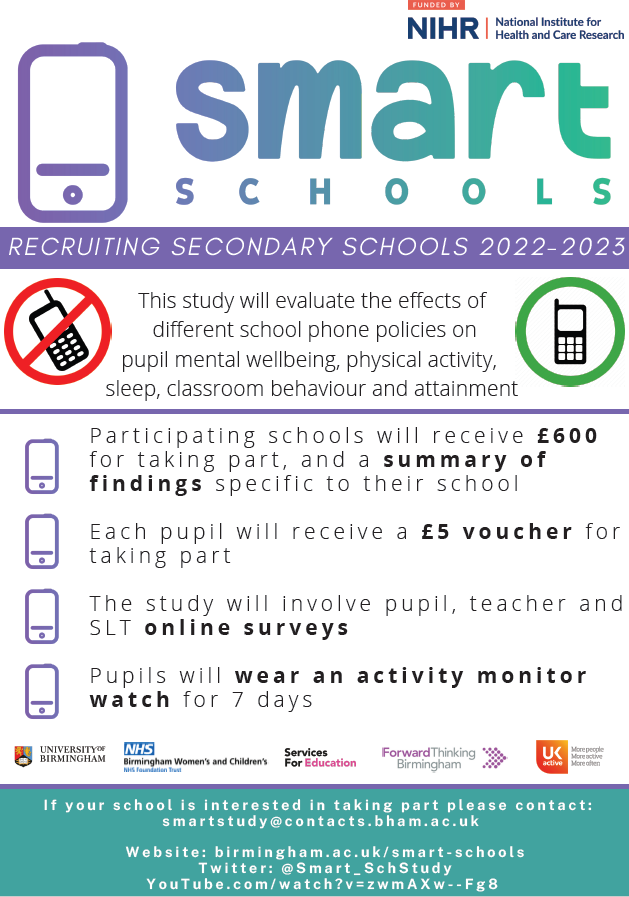
This research aims to establish which types of school phone policies are most supportive of pupil mental wellbeing.

What does the study involve:

This study will take place in 30 secondary schools, with year 8 and year 10 pupils.

Researchers will compare pupil mental wellbeing in schools that restrict phone use, with schools that permit phone use (e.g. allow phones to be used at breaks and lunchtimes).

Researchers will also measure behaviours associated with mental wellbeing, such as, physical activity, sleep, attainment and classroom behaviour.

To collect this data, pupils will complete a 30 minute online survey and wear an activity monitor watch for 7 days.

The class teacher and a member of the senior leadership team will complete a 30 minute online survey.

In some schools, 60 minute focus groups with pupils, school staff and parents/carers will take place.

Schools will receive £600 for taking part, and pupils will receive a £5 voucher for taking part
Learn more…

Latest posts

  • 3 March 2026

    International Womens Day is 8th March

  • 26 February 2026

    Self Injury Awareness Day 2026

  • 15 February 2026

    Random Acts of Kindness Week is 15th-21st February 2026

Featured Posts

  • 2 February 2021

    Anna Freud Mental health and wellbeing calendar: Autumn term 2025

© Copyright Breathe 2020- 2024
Terms and Conditions  |  Privacy Policy

About Breathe
  • Overview
  • Our team
  • Contact Us
  • FAQs
Article Resources
  • Early Years
  • Primary School
  • Secondary School
  • Teachers Toolkit

supporters & partners                    

Learning Disability Week – 20-26 June 2022 World Mental Health Day – 10 October 2022
Scroll to top