Topic: Self-Esteem
For: Primary School
Coverage: International
Type: Lesson plans
“Everybody is a genius. But if you judge a fish by its ability to climb a tree, it will live its whole life believing that it is stupid.”
Albert Einstein
Self-esteem is a considerably broad topic, however, we feel the three most important things for teachers to know are:
Put simply, self-esteem is how someone thinks or feels about themselves. We often hear of self-esteem in deterministic terms such as someone having high or low self-confidence. This is sometimes understood as self-confidence and therefore self-esteem being a trait that someone is born with. However, by examining what self-esteem is, we can see that it is actually something that we develop and is often inconsistent.
Becoming a person
Our sense of self is formed through our relationships with others, and this can occur in what is presently being experienced, like feeling good about praise you received in a meeting you just had, or feeling bad about upsetting a friend in the past. These experiences of others’ responses and recognitions act to inform us of our sense of worth and highlights the importance of early relationships and connectedness. These early relationships and connectedness are key conceptions in the theory of attachment.
Self-efficacy
Connected to our sense of self is a sense of what we can ‘do’, which is known as self-efficacy. Self-efficacy is the sense of mastery young people develop through their interactions with the world (though not necessarily via others). If a young person masters a particular skill, for example playing guitar, then they are able inform their sense of self that they can achieve things, which can help them to generate self-esteem. Being self-efficacious often accompanies a whole host of useful skills and beneficial attributes such as perseverance and problem solving, and young people with high self-efficacy tend to be more optimistic and less anxious in general.
An individual with both a sense of self-worth (self-esteem) and a sense of self-mastery (self-efficacy) displays to the outside world what we often describe as self-confidence.
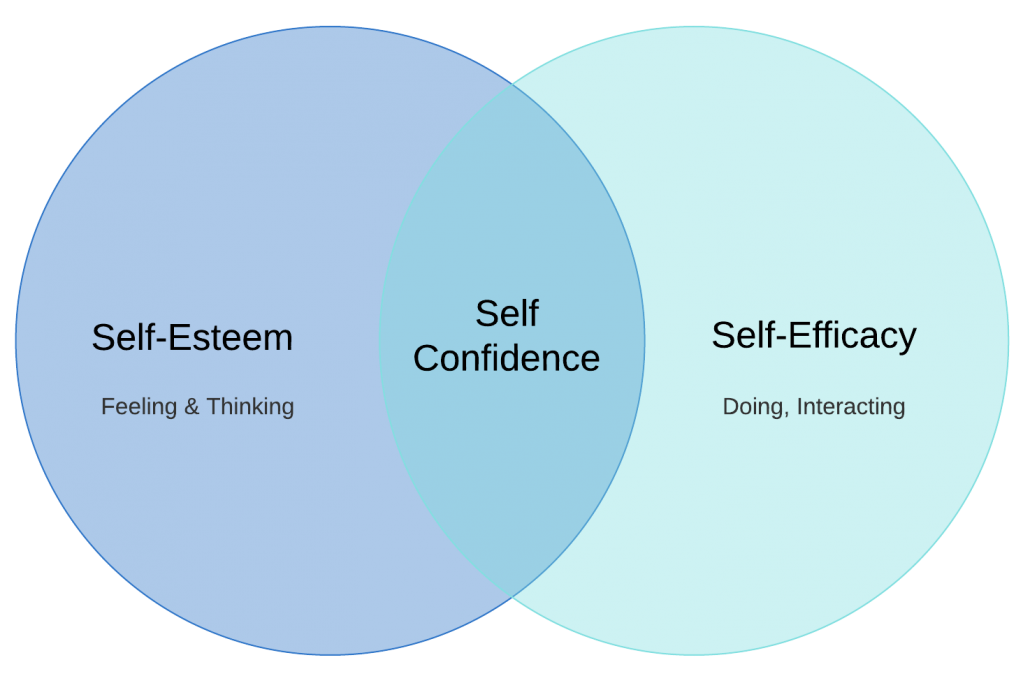
Low self-esteem is a risk factor for mental health problems, as outlined in risk models of early intervention.
Viewing self-esteem as our own self-evaluation via interactions with others, we can begin to see how crucial the early development of a positive mindset becomes for a young person to navigate their everyday lives. Young people are set this task whilst learning about the world, their bodies, their studies, and often against a backdrop of peer pressure to look a certain way (which often accompanies bullying). Most classrooms will also include a significant number of children who have experienced trauma, neglect or abuse of some form, collectively referred to as Adverse Childhood Experiences (ACEs).
Since self-esteem feeds into self-confidence, it can affect the choices young people make and shape their perception of the world. A lack of belief in one’s abilities or worthiness can limit the number necessary attempts to take on challenges and learn from experiences, therefore reducing a young person’s ability to build resilience, independently cope/problem solve and regulate emotions. Continued low self-esteem can have a snowball effect, reinforcing itself in a negative cycle and creating vulnerabilities to other mental health concerns such as anxiety and depression.

Over time, a young person with low self-esteem can begin a process of psychological defence building. This can involve removing themselves from activities and interactions altogether and building a negative worldview as a means of normalising how they are feeling and how they perceive their role in the world. This can make it much harder to communicate with a young person, therefore diminishing our abilities to support, assess for risk and guide them through difficult times in their lives.
Teacher wellbeing
As with all matters of wellbeing, taking time to focus on areas such as emotional intelligence and social confidence helps to build an outlook that feeds into the interactions a teacher has with the young people they support. Whilst we are preparing ourselves to help others, we must also look after ourselves. We’ve got some advice and guidance on this in the teacher wellbeing section.
Assessing the young people you support will give you a sense of who might need extra help with their self-esteem. Young Minds have compiled a list of characteristics of high and low self-esteem which can help with identifying young people who may need further support.
A young person with low self-esteem could:
A young person with high self-esteem could:
Since a young person cannot always predict what feedback they will get from those around them, teachers can step in and try to the promote a young person’s positive aspects. However, it is worth remaining mindful that whilst a young person might objectively recognise that they should be valued, they might not feel it about themselves.
When feelings are hard to access for a young person, self-efficacy can be an invaluable tool. Helping a young person take part in activities can generate their own sense of self-worth. This could be setting individuals and groups tasks and recognising the effort in taking part, or giving individuals responsibilities within the classroom which gives a young person opportunity to work with others in positive manner and receive feedback, thereby completing a circuit of positive reinforcement.

When setting tasks for young people with low self-esteem, it is important that these tasks are challenging but realistic. It is also important to be grounded with feedback and avoid unwarranted grandiose praise, as this can be make young people feel they can complete any task regardless of skill or learning and can lead to simply the seeking of praise.
Acknowledging and normalising that it is impossible to be good at everything all the time will help a young person to persevere through difficult times. These explanations can be delivered through personal or created stories (e.g. ‘The Little Engine That Could’ by Watty Piper).
Focusing on how learning through experience occurs, and relating how a young person might have felt when first attempting something to when they have become more comfortable, is a great way to build a young person’s capacity for resilience.
Of course, teachers have to manage their own self-esteem and therefore it is paramount that a teacher’s wellbeing is also nurtured and supported. It is often through the reflection and understanding of one’s own mental health and wellbeing that we can be become truly effective in providing support to others.
Everyone is born into relationships. When considering individuals, we must also consider the environment around them, including schools, communities and households that young people interact within.
If a young person is identified as suffering from low self-esteem, then having yourself and the parents working together to provide consistent support is highly beneficial for the success rate of an intervention. However, parents may not be aware or equipped with knowledge of how to support their child’s mental wellbeing and may even be suffering with aspects of mental health themselves. This a where being able to direct parents to sources of information and support in their local communities can result in a big positive step for both child and parent. For more general information on parents, see our talking to parents section.
Put simply, self-esteem is how someone thinks or feels about themselves. Our sense of self is formed through our relationships with others, and this can occur in what is presently being experienced, like feeling good about praise you received in a meeting you just had, or feeling bad about upsetting a friend in the past. These experiences of others’ responses and recognitions act to inform us of our sense of worth and highlights the importance of early relationships and connectedness. These early relationships and connectedness are key conceptions in the theory of attachment.
Low self-esteem is a risk factor for the development of mental health problems as outlined in risk models of early intervention. Over time, a young person with low self-esteem can begin a process of psychological defence building. This can involve removing themselves from activities and interactions altogether and building a negative worldview as a means of normalising how they are feeling and how they perceive their role in the world. This can make it much harder to communicate with a young person, therefore diminishing our abilities to support, assess for risk and guide them through difficult times in their lives.
Since a young person cannot always predict what feedback they will get from those around them, teachers can step in and try to the promote a young person’s positive aspects. However, it is worth remaining mindful that whilst a young person might objectively recognise that they should be valued, they might not feel it about themselves.
( resources found)










© Copyright Breathe 2020- 2024
Terms and Conditions | Privacy Policy
supporters & partners